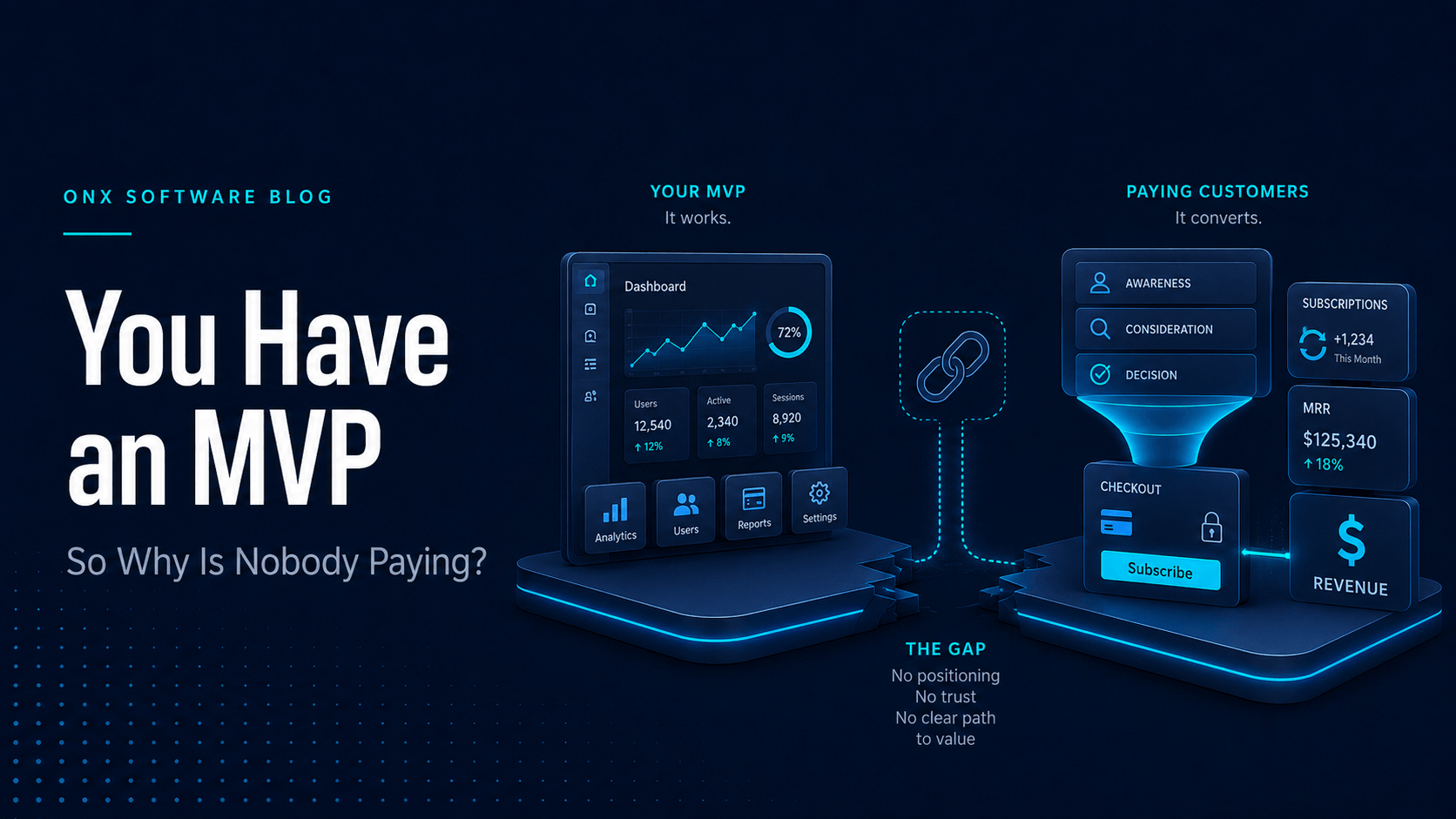
You built an MVP. The product works. People request demos, a few users try it, and some even say they like it. Yet the process stalls when payment enters the conversation.
This is one of the most important transitions in product development:
A usable product is not automatically a sellable product.
An MVP can validate a core problem and demonstrate that the solution functions. But a customer pays only when the value is clear, the risk feels acceptable, and the purchase can be justified operationally and financially.
Interest is not purchase intent
Comments such as “This looks great,” “There is definitely a need for this,” or “We may consider it later” can be encouraging. They do not validate willingness to pay.
People may be curious about a free product. They may try it and genuinely like it. Buying introduces a different set of questions:
- What measurable benefit will this create?
- Is switching from the current method worth the effort?
- Will my team actually use it?
- Does it introduce data or operational risk?
- Which budget will pay for it?
- What support will we receive after purchase?
If people engage with your MVP but do not buy, one or more of the following issues may be responsible.
1. The problem is not expensive enough
Not every inconvenience is important enough to justify a software purchase.
A team may spend two hours each month preparing a report in Excel. Reducing that task to ten minutes is useful, but the saving may not be large enough to outweigh the cost and disruption of adopting a new system.
The same problem can also have very different economic value across customer segments. A minor inefficiency for a ten-person business may represent a serious operational cost for an organisation with a hundred branches.
The target market should therefore not be “everyone who has the problem.” It should be the segment that experiences the problem most frequently, most severely, or at the highest cost.
2. The value proposition is described as a list of features
“AI-powered,” “advanced reporting,” “easy-to-use dashboard,” and “all-in-one platform” are not purchase reasons on their own.
Customers buy outcomes, not feature labels.
Instead of telling a school administrator that the product includes detailed analytics, explain that teachers can identify struggling students on the same day rather than weeks later.
Instead of promising a tourism business “automated operations,” show how the product reduces information loss between reservations and field teams, or how it eliminates repeated manual entry.
A strong value proposition answers three questions:
- For whom is the product built?
- Which important problem does it solve?
- What measurable result changes?
3. The user and the buyer are different people
This is one of the most common gaps in B2B products.
The end user may like the experience while the economic buyer looks for entirely different evidence.
A teacher may want speed and simplicity. A school administrator may require reporting, central user management, security, and cost control. A doctor may want a smooth clinical workflow, while the hospital administration expects integration, permissions, audit trails, and compliance.
If the MVP validates only the end-user experience, it may still be incomplete for the buyer.
At minimum, understand three roles:
- The person who uses the product
- The person who receives the operational benefit
- The person who controls budget and approval
4. The Minimum Sellable Product is incomplete
A customer may like the core capability but still need additional elements before purchasing. These are not always the product’s main innovation, yet they are often essential to making the purchase feel safe and practical.
Typical examples include:
- User and role management
- Data import or migration
- Basic reporting
- Contracts and billing
- Technical support
- Backups
- Security documentation
- Integration options
- A clear onboarding process
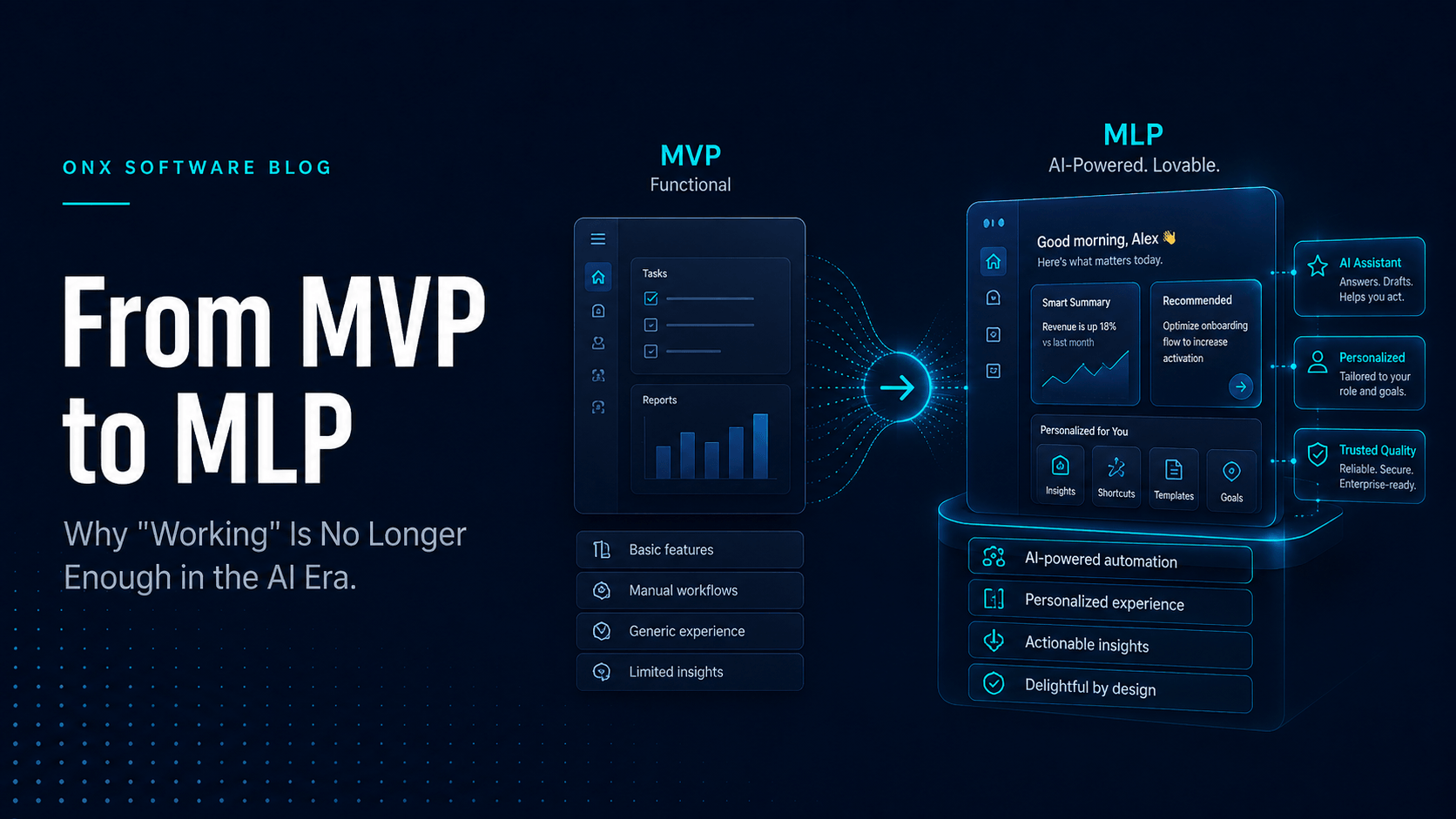
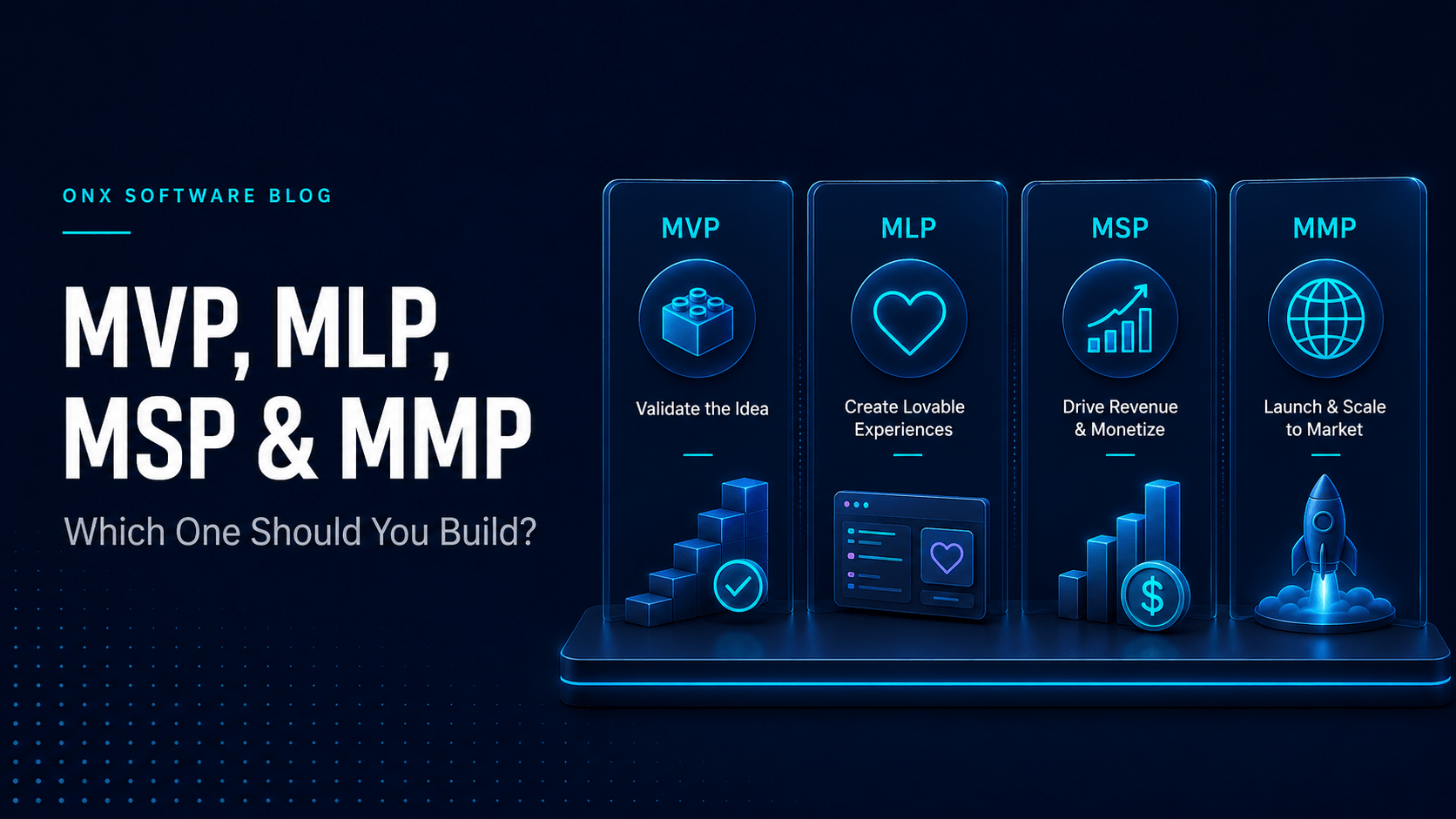
This is the transition from MVP to MSP: from the minimum product that proves the solution to the minimum product a customer can responsibly buy.
5. Pricing does not match the value model
A product may fail to sell not because the number is too high, but because the pricing structure does not align with how the customer experiences value.
Per-user, per-transaction, institution-wide, usage-based, and fixed-subscription models create different incentives and objections.
A seasonal tourism business may resist a fixed annual licence. A school with fluctuating enrolment may view seat-based pricing as risky. A large institution may care less about a low starting price and more about total cost of ownership, service levels, and implementation effort.
Before copying competitor pricing, ask:
Which measurable unit of value is the customer actually paying for?
6. The customer does not trust the product or the company yet
Buying a new product creates operational risk, especially for institutional customers. Even when the product is strong, the buyer may have concerns about support, business continuity, security, or the team’s ability to understand the sector.
Trust is built through:
- Real pilot results
- References and case studies
- A clear support model
- Security and data policies
- A credible roadmap
- Contractual clarity
- Relevant team experience
At this stage, explaining nearly 20 years of software experience and more than 12 years of focused EdTech work is not simply corporate self-promotion. It signals that the team understands both the domain and the realities of building and operating digital products over time.
7. A distribution problem is being mistaken for a product problem
Sometimes a product does not sell because it is not reaching the right people.
Product teams often spend months improving the software while postponing decisions about distribution, access to decision-makers, and the buying journey.
How will the target customer discover and buy the product?
- Direct sales
- Sector partnerships
- Integration partners
- Industry events
- Content marketing
- Consultants
- Resellers or distributors
- Product-led invitations or referrals
Distribution cannot be separated completely from the roadmap. The sales model may create product requirements of its own. Selling through partners, for example, may require multi-customer administration, partner dashboards, or commission tracking.
What should you do next?
Replace general feedback with purchase conversations
Do not ask only, “Would you use this?” Ask, “What would need to be true for your organisation to buy this?”
Narrow the target segment
Focus on the customer group that feels the problem most intensely and has both the authority and budget to act.
Categorise lost opportunities
Record whether deals are lost because of price, missing capabilities, trust, timing, authority, integration, procurement, or budget.
Define the MSP
Identify the capabilities, evidence, support, and safeguards that are genuinely necessary for the first paid customer.
Make value measurable
Frame the product in terms of time saved, revenue gained, errors reduced, adoption improved, or operational capacity increased.
An MVP that does not sell is not automatically a failed idea. But the assumption that “a few more features will fix it” is often wrong.
The obstacle may be the target segment, value proposition, pricing model, trust, buying process, or distribution channel. Before writing more code, understand why the purchase is not happening.
Building a working product is a technical achievement. Building a product people pay for requires the technical, commercial, and operational parts of the business to work together.