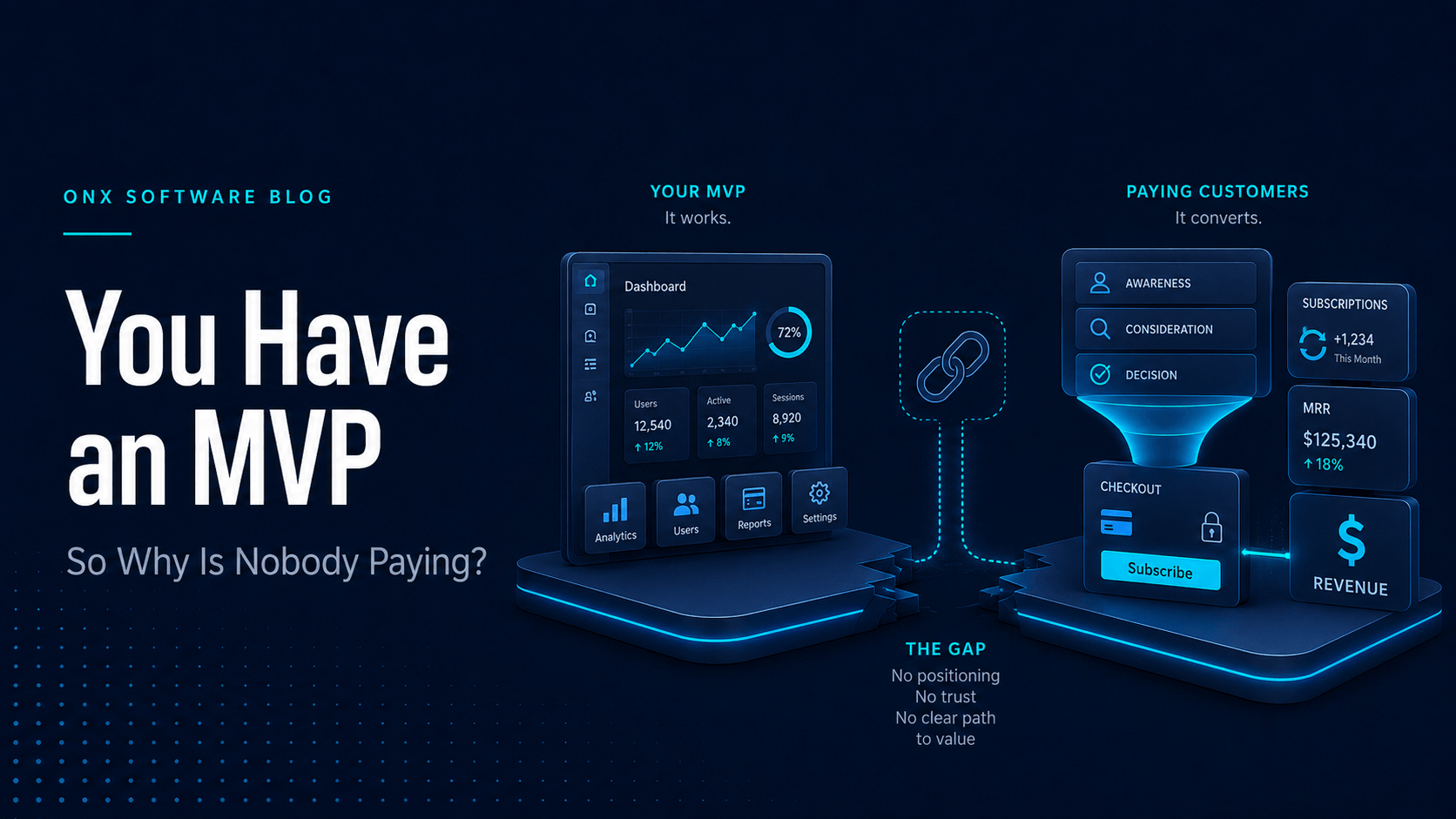
AI-assisted tools have made it faster and less expensive to create the first version of a digital product.
Teams can generate code, design interfaces, prepare content, build prototypes, and connect services in far less time than before. This has not made the MVP obsolete. It has made the market more crowded with products that technically work.
As a result, basic functionality is becoming less differentiating.
A product that launches, performs its core task, and includes an AI feature is no longer unusual. Users have more alternatives, and the cost of abandoning a new tool is often very low.
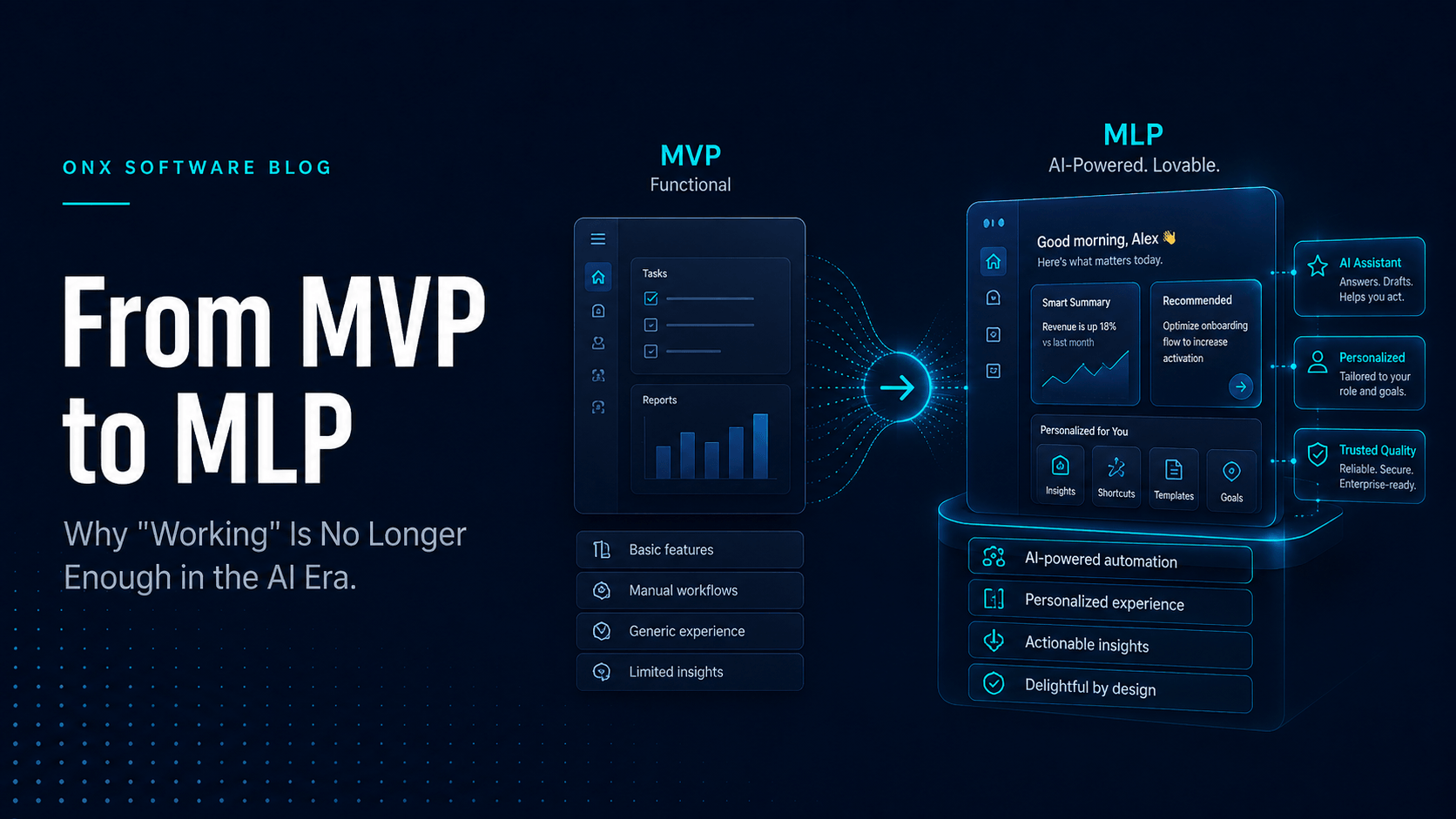
That is why product teams are increasingly complementing the MVP mindset with the idea of an MLP: a Minimum Lovable Product.
The difference between a working product and a lovable one
The central MVP question is:
Does this solution work?
The MLP adds another:
Will the user want to use it again?
A product may complete the task successfully and still fail to create lasting adoption. If users must stop and think at every step, if the results are difficult to trust, or if the experience is filled with avoidable friction, the product will struggle to become part of their routine.
“Lovable” can sound emotional or decorative, but in practice it is often the result of small decisions that respect the user:
- Asking only for necessary information
- Remembering where the user left off
- Explaining how to recover from an error
- Delivering the first meaningful result quickly
- Presenting outputs clearly
- Creating confidence at critical moments
Why AI is accelerating this shift
Building is easier; choosing is harder
In the past, getting a product to work at all was a significant barrier. Today, many products can offer similar functionality within a short period of time.
The user’s question is changing from “Does a product like this exist?” to “Which of these products is the best fit for me?”
Features can be copied quickly
An AI capability may provide a temporary advantage, but competitors can often introduce a similar feature soon afterwards. Durable differentiation comes less from the feature itself and more from how well it fits into the user’s real workflow.
Adding automated question generation to an education platform, for example, is increasingly accessible. Designing the complete experience remains difficult: helping the teacher choose the right level, review the generated questions, make changes, assign them to a class, and interpret the results.
The feature is only one part of the product.
Users must be able to trust AI outputs
In AI-enabled products, trust is part of the experience.
Users need to understand what the system produced, how reliable it is, when human review is necessary, and how they can correct or reject the output.
In HealthTech, an unclear or inaccurate result may create serious risk. In EdTech, automation that removes pedagogical control from the teacher may face resistance. In tourism, an incorrect recommendation can damage the customer experience and the brand behind it.
The presence of AI does not create value by itself. Value comes from combining automation with the right checks, context, and level of user control.
Five foundations of a Minimum Lovable Product
1. Time to first value
How quickly does a new user experience a meaningful benefit?
Long forms, complicated setup, and empty dashboards weaken the first session. An MLP helps the user reach the “this is useful to me” moment as directly as possible.
For a teacher, that moment may be creating a class and sharing the first activity. For an operations manager, it may be seeing previously fragmented information in one reliable view.
2. Excellence in the critical journey
The first release does not need every screen to be perfect. But the journey that creates the core value must feel reliable, understandable, and complete.
One important workflow executed well is more lovable than ten partially finished features.
3. Trust and control
Users rarely want to surrender all control to an automated system, particularly when AI is involved.
Important trust mechanisms may include the ability to:
- Edit an output
- View the source or supporting information
- Reject a recommendation
- Review the action history
- Undo a change or recover from an error
These are not secondary details. They influence whether the user feels safe enough to adopt the product.
4. Understanding the user’s context
The same feature can mean different things to different roles.
A new user may need guidance, while an experienced user values speed and shortcuts. A school administrator may want a high-level institutional report, while a teacher needs detailed student-level information.
A strong product does not force every role into the same experience. It reflects the user’s context in the information, actions, and level of control it provides.
5. Small but meaningful details
Lovable products are often remembered not for one enormous feature, but for the details that remove daily friction:
- Intelligent defaults
- Bulk actions
- Autosave
- Clear empty states
- Help offered at the right moment
- Language that sounds like the user’s own language
- Notifications that are useful rather than constant
These details may never become the main headline on a landing page, but they strongly influence retention.
Does MLP mean building more?
No.
An MLP is not an excuse to add more features to the first release. It is a reason to care more deeply about the few experiences that matter most.
A small product can be lovable. A large product with dozens of features can still feel confusing, slow, and unreliable.
The key question is:
Which few moments must we execute exceptionally well for users to feel the product’s value?
In that sense, MLP and over-engineering are opposites. Lovability sharpens focus rather than expanding scope.
How to move from MVP to MLP
Study behaviour, not only opinions
Where do users stop? Which steps do they repeat? Which capability brings them back?
Ask about real usage
Instead of “Do you like the product?” ask, “When did you last use it, what were you trying to do, and where did you struggle?”
Simplify the core journey
Before adding another capability, look for steps, decisions, and fields that can be removed from the existing experience.
Design the trust model for AI
Accuracy expectations, human review, explainability, correction, and failure scenarios should be part of product design—not an afterthought added after the model is connected.
Create a reason to return
Why should the user come back tomorrow or next week? The answer may involve new data, progress, unfinished work, collaboration, or a recurring operational need. It should be visible in the product strategy.
Across years of building software in different industries, we have consistently seen users adopt the solution that makes their work meaningfully easier—not necessarily the one with the most advanced technology.
AI does not change that truth. It makes the difference between an ordinary product and a well-designed one more visible.
In the age of AI, the advantage is not producing the highest number of features in the shortest time. It is learning faster what creates a useful, trustworthy, and repeatedly chosen experience for the right user.